The Future of Diabetes Management: Why Digital Health is the New Standard of Care
BLOG
1/20/20262 min read
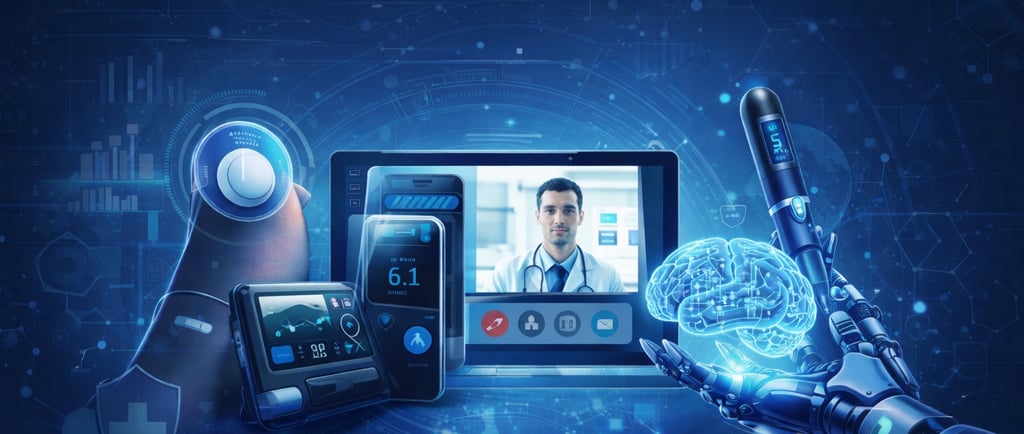
For decades, the image of diabetes management was defined by the needle: the frequent finger-prick for blood glucose checks and the multiple daily injections of insulin. While these tools saved lives, they also brought a heavy "diabetes burden"—the mental and physical fatigue of constant manual intervention.
1. The Rise of the "Artificial Pancreas"
One of the most significant breakthroughs in recent years is the evolution of Automated Insulin Delivery (AID) systems. By linking a Continuous Glucose Monitor (CGM) to an insulin pump via sophisticated AI algorithms, these "hybrid closed-loop" systems can predict glucose fluctuations up to 30 minutes in advance.
Instead of the patient calculating every dose, the system automatically adjusts insulin delivery in real-time. This technology, once exclusive to Type 1 patients, is now rapidly expanding to Type 2 management, significantly increasing "Time in Range" (TIR) for millions.
2. Predictive AI: Seeing the Future of Glycemic Control
Digital health is moving from descriptive (what happened?) to predictive (what will happen?).
Early Detection: Modern AI models can now analyze unstructured clinical data and biomarkers to identify the risk of Type 1 diabetes a full year before symptoms appear.
Dose Optimization: Platforms like GlyTwin use digital twins—virtual models of a patient’s metabolism—to simulate how a specific meal or workout will affect their blood sugar before they even take a bite.
3. Wearables: Beyond the Wrist
The 2026 landscape of wearables has moved beyond simple step-counting. We are seeing:
Smart Insulin Pens (SIPs): For those not ready for a pump, SIPs automatically log dose timing and amounts, syncing with phone apps to prevent missed or "stacked" doses.
Biometric Sensors: New epidermal patches and smart textiles now monitor not just glucose, but also lactate, hydration, and even muscle loss—a critical factor for those on GLP-1 therapies.
4. Telehealth and the "Virtual Clinic"
The "Beyond the Needle" revolution isn't just about hardware; it's about access. Telemedicine and integrated Remote Patient Monitoring (RPM) allow doctors to view a patient’s live data dashboard from anywhere in the world. This allows for "micro-adjustments" to treatment plans through asynchronous messaging, reducing the need for exhausting in-person hospital visits.