The Triple Threat: Is Retatrutide the Future of Diabetes and Weight Management?
BLOG
2/7/20262 min read
For years, the landscape of diabetes and weight management has been steadily evolving. We’ve seen incredible advancements, from smart insulin pens to continuous glucose monitors that make daily life easier. But every now and then, a development comes along that truly feels like a paradigm shift.
Enter Retatrutide.
If you've heard of medications like Ozempic, Wegovy, or Mounjaro, you're familiar with the GLP-1 revolution. These drugs mimic natural hormones that help control blood sugar, slow digestion, and reduce appetite. They've been game-changers for millions. But what if we told you there's a new contender on the horizon that takes this science not one, but two steps further?
Beyond GLP-1: Understanding the "Triple G" Advantage
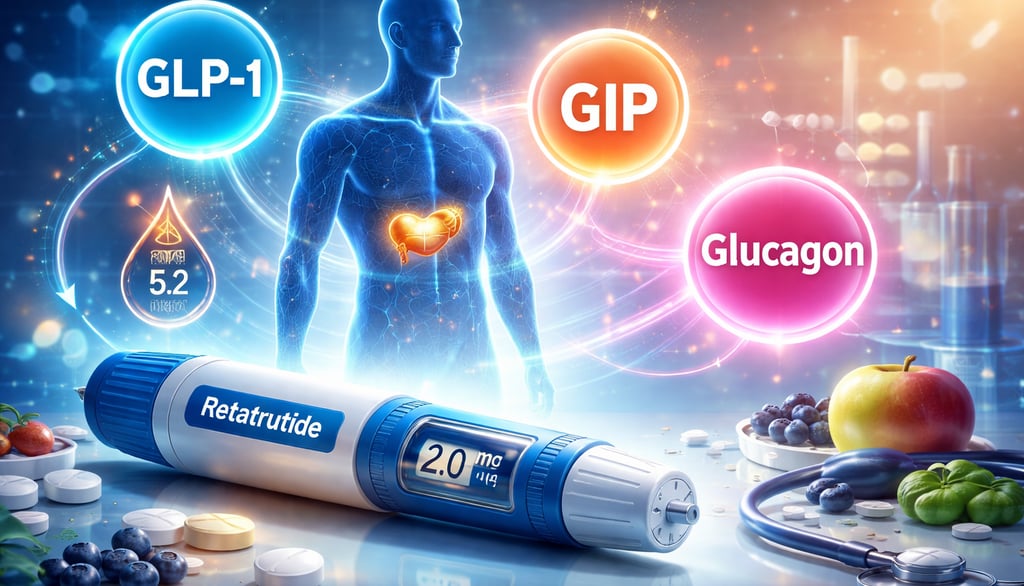
Most current GLP-1 medications (like Ozempic/Wegovy) target one hormone receptor: Glucagon-Like Peptide-1 (GLP-1). Mounjaro stepped it up by targeting two: GLP-1 and Glucose-Dependent Insulinotropic Polypeptide (GIP).
Retatrutide, currently in advanced clinical trials, is different. It's a "triple agonist," meaning it activates receptors for not just GLP-1 and GIP, but also Glucagon.
Why is this a big deal?
Imagine a symphony. GLP-1, GIP, and Glucagon are all instruments that play a role in how your body manages energy, blood sugar, and appetite.
GLP-1 helps release insulin, slows stomach emptying, and tells your brain you're full.
GIP also boosts insulin release and works synergistically with GLP-1.
Glucagon, traditionally known for raising blood sugar, has been found to have complex metabolic effects. In the context of a "triple agonist," it appears to play a role in increasing energy expenditure and potentially reducing fat mass in a unique way.
By hitting all three targets, Retatrutide offers a more comprehensive and powerful approach to metabolic control.
What the Trials Are Showing: Unprecedented Results
Early and mid-stage clinical trials for Retatrutide have been nothing short of remarkable. Participants have shown:
Significant Weight Loss: Studies have reported average weight loss percentages that surpass even the impressive results seen with current dual-agonist medications, with some individuals experiencing up to 24% body weight reduction. This is approaching the effectiveness of bariatric surgery for many.
Superior Glycemic Control: For individuals with Type 2 Diabetes, Retatrutide has demonstrated exceptional ability to lower HbA1c levels, often bringing them into non-diabetic ranges.
Improved Cardiometabolic Markers: Beyond just weight and blood sugar, patients are seeing improvements in blood pressure, cholesterol, and other indicators of heart health.
The convenience factor is also a major draw: Retatrutide is designed to be a once-weekly injection. Imagine the impact of achieving such profound health benefits with just one dose every seven days.
The Future is Bright
While we eagerly await the final results of Phase 3 trials and regulatory approval, Retatrutide represents a thrilling leap forward. It underscores a deeper understanding of our body's intricate metabolic pathways and how we can leverage them to fight chronic diseases like Type 2 Diabetes and obesity more effectively.
For those living with diabetes or struggling with weight management, the prospect of a "triple G" drug offers renewed hope and a glimpse into a future where treatment is not just effective, but truly transformative.
Stay tuned as we continue to follow the exciting developments of Retatrutide and other groundbreaking therapies!